The reality of

Farm murders

Report a farm murder/attack

Definition of farm attack:

Figures about farm attacks and farm murders

The information on this website was obtained from the latest available AfriForum Community Safety Division database on farm attacks and farm murders, as well as from previous findings published by AfriForum. Additional extracts were sourced from media reports and other organisations, including the Transvaal Agricultural Union of South Africa (TLU SA) and the South African Police Service (SAPS).

The average number of incidents per week from 2019 to 2024 was approximately 6,76

At least 3 240 people were directly affected by farm attacks from 2019 to 2024. This estimate includes victims who were directly assaulted, threatened, murdered or present at the scene of an attack.

At least 5 647 attackers and/or suspects were involved in these farm attacks in some capacity.

Based on SAPS data from 2019 to 2022, convictions were secured in only 66 (i.e. 4,7%) of the 1 402 farm attack and farm murder incidents.

Monthly distribution of the percentage of farm attacks and farm murders that took place from 2019 to 2024

Month

Attacks (including murders)

Murders

January

8%

4%

February

8%

8%

March

8%

8%

April

8%

10%

May

9%

8%

June

9%

11%

July

9%

11%

August

10%

11%

September

8%

7%

October

8%

7%

November

9%

7%

December

8%

8%

*Note: Numbers have been rounded off.

Percentage of farm attacks and farm murders per province (2019 to 2024)

Province

Attacks (including murders)

Murders

Gauteng

29%

20%

KwaZulu-Natal

8%

14%

Limpopo

10%

7%

Mpumalanga

10%

12%

Northern Cape

1%

4%

North West

14%

9%

Eastern Cape

9%

8%

Free State

12%

19%

Western Cape

8%

7%

*Note: Numbers have been rounded off.

Modus operandi of suspects and/or attackers

While the circumstances of attacks vary, suspects use a variety of tactics to carry them out.

  • Farm attack and farm murder suspects can operate either alone or in groups, which may range in size from two individuals to much larger groups.
  • Attacks may occur at any time of the day or week.
  • Suspects use a range of tactics to enter farms, which include surprise ambushes or luring victims under false pretences to buy farm produce.
  • Suspects employ a range of weapons, which include firearms, knives, pangas (machetes), pickaxes, iron bars and their bare hands.
  • Sometimes the attackers steal victims’ vehicles as getaway vehicles. Some of these vehicles are later found abandoned.

Severity of violence:

Selected notable cases through the years


  • Alice Lotter and her daughter Helen were brutally attacked near Welkom in the Free State in March 2009. Both mother and daughter were assaulted and tortured and died because of their injuries. The daughter’s front teeth were knocked out, she had multiple wounds, and her genitals were mutilated. The mother died from asphyxiation as a result of swallowing blood from stab wounds.
  • In December 2010, the Potgieter family were attacked and murdered on a farm near Lindley in the Free State. The couple’s two-year-old daughter, Wilmien, was executed at point-blank range and left in a box. The father was stabbed 151 times with a pitchfork, and the mother’s throat was slit. A note on the farm gate read, “We have killed them. We are coming back.”
  • In May 2011, a 49-year-old farmer from Ottosdal in the North West province, Andries van der Merwe, was shot in the chest, the back and the head by three assailants after being held at gunpoint while the attackers ransacked his home. His body was then tied to the back of his vehicle and dragged for approximately 1,2 km before the car overturned.
  • In January 2012, 77-year-old farmer Hendrik Cilliers was beaten, tied to a tree and then executed on his farm near Stella in the North West province. His body was then dragged behind his vehicle for more than a kilometre.
  • In October 2013, an elderly couple, Dawid and Ralie de Villiers, were murdered on their farm near Barkly East in the Eastern Cape, and their disabled son was left for dead. The attacker stabbed the couple multiple times. A number, possibly linked to a criminal gang, was written on the walls of the home in the victims’ blood.
  • In January 2015, Toon and Rienie Swanepoel (both in their 70s) were murdered on their farm in the Free State. The couple was tied to a bed and tortured for hours, and Rienie was repeatedly raped before they were taken to a remote area of the farm, where they were shot.
  • In February 2017, Susan Howarth and her husband, Robert Lynn, (both in their 70s) were attacked on their farm near Dullstroom, Mpumalanga. They were tortured with a blowtorch, shot and left for dead in a ditch. Only the husband survived.
  • In March 2018, a family was brutally attacked on their farm near Hankey in the Eastern Cape. The attacker threatened to rape the mother in front of her children, aged 15 and 13, and proceeded to rape the mother, who had been shot in the buttocks. The attacker also threatened to rape the woman’s daughter. The family survived but was deeply traumatised.
  • In May 2019, Jurie and Liezel Wessels were attacked on their farm near Bonnievale in the Western Cape. Jurie was shot in the head and died, while Liezel was stabbed and boiling water was poured over her.
  • In July 2020, Danie (83), Breggie (73) and Elzabie Brand (54) were attacked and abducted from their smallholding in Hartswater, Northern Cape. Their bodies were discovered days later. They were tied up and strangled, and they had blunt and sharp force injuries to their heads and faces.
  • In March 2021, 70-year-old farmer Bertus Steenberg was found dead on his Leeuwpoort farm near Ogies, Mpumalanga, tied to a vehicle with a nylon rope. According to the police, he was likely strangled with the rope and a shirt and suffered head and facial injuries from an assault.
  • In March 2022, a 76-year-old man, Gustaf Rappard, was strangled to death with a bale rope by four attackers on his farm in Delmas, Mpumalanga. His body was later discovered in the barn. During the attack, his wife was tied up inside the house.
  • In June 2023, an attacker ambushed and killed Anneke Claassen (76) and her friend Hennie Claassen (77) on her farm Klipfonteinhoek near Ohrigstad, Limpopo. They were tortured and their bodies set alight by the attacker.
  • In May 2024, an elderly couple in their seventies, Christo and Christa Morrison, were attacked on their farm Rietfontein near Glen in the Free State. Christa’s partially clothed body was discovered in a septic tank, while her husband’s body was found in a borehole. It was reported that the woman’s throat had been slit and that her husband had been killed with sheep shears.
  • In October 2025, Rolé Uys (70) along with her farm workers were subjected to an hour-long torture at the hands of four attackers on her farm in Carolina, Mpumalanga. The victims were forced to lie down, and the attackers proceeded to pour boiling water on Uys and her farm manager.        

Timeline of

noteworthy events

  • 1991 to 1997:
    According to the TLU SA, 791 farm attacks were recorded.
  • 1997–1998:
    The South African government hosted the Rural Safety Summit and announced the Rural Protection Plan to address rural safety, and farm attacks in particular. By 1998, farm attacks were given priority status.
  • 2001–2003:
    The Committee of Inquiry into Farm Attacks, established by the Minister of Safety and Security, released its report in 2003. However, the report failed to address the brutality and torture often linked to these attacks.
  • 2003:
    President Thabo Mbeki unexpectedly announced the disbandment of the commando system –a voluntary, part-time reserve of the South African Defence Force (SANDF) and core part of the Rural Safety Plan – thereby reducing the focus on farm security.
  • 2006:
    The SANDF confirmed that most commando units would be phased out by the end of 2006.
  • 2008:
    The SAPS stopped publishing official statistics on farm attacks.
  • 2010:
    Julius Malema, then President of the African National Congress Youth League (ANCYL), publicly chanted the anti-apartheid struggle song “Dubul’ ibhunu”, translated as “Shoot the Boer” or “Kill the Boer”, for the first time. Since then, he has chanted the song on numerous occasions.
  • 2012–2016:
    AfriForum repeatedly submitted memorandums, reports and legal requests urging the government to classify farm attacks as a priority crime, but despite protests, marches and court action, officials largely ignored or dismissed the appeals.
  • 2018:
    The Minister of Police stated in Parliament that units such as the Directorate for Priority Crime Investigation (DPCI) would respond to all farm and smallholding attacks, suggesting they were treated as priority crimes. A month later, he reversed this position, confirming that farm attacks would not receive priority crime status.
  • 2018:
    In a social media post, US President Donald Trump claimed that “large-scale killing of farmers” was taking place in South Africa. In response, President Cyril Ramaphosa, however, asserted that “there are no killings of farmers or white farmers in South Africa”.
  • 2020:
    AfriForum issued an open letter to President Ramaphosa requesting a meeting to discuss the farm murder crisis, but no meeting occurred.
  • 2022–2024:
    In August 2022, the South African Equality Court ruled that the song “Dubul’ ibhunu” (“Shoot the Boer”), chanted by Julius Malema and the EFF, did not constitute hate speech, viewing it as political expression. This decision was upheld by the Supreme Court of Appeal in March 2024, dismissing AfriForum’s appeal.
  • 2025:
    The Constitutional Court dismissed AfriForum’s appeal against the Supreme Court of Appeal’s ruling that “Dubul’ ibhunu” (“Kill the Boer”) was not hate speech.
  • 2025:
    AfriForum petitioned the National Police Commissioner to classify farm attacks as a national priority crime, but the DPCI responded that this crime would not be given such status.

What does AfriForum do

TYDLYN INHOUD

  • Increase in farm safety structures across the country.
  • Report shows a decrease in farm murders, indicating greater defensibility of communities.
  • Active involvement in safety initiatives and legislation.
  • Large-scale awareness campaign locally and abroad.
  • AfriForum supports victims of farm attacks with legal aid and trauma support.
  • Expand safety structure to more towns and districts.
  • AfriForum participates in international media tours and provides input in interviews with international channels.
  • Publish annual reports on farm attacks and safety.
  • Begin with security camera networks and drones in certain rural areas.
  • Poster and activist campaigns against farm murders in major cities such as Pretoria and Cape Town.
  • #StopTheMurders social media campaign gets worldwide attention.
  • Launch the Stop the murder campaign – focused on international pressure, statistics and local mobilisation.
  • Begin with safety training and radio infrastructure for farming communities.
  • Undertake international awareness campaigns about farm murders – including petitions and discussions at the UN.
  • AfriForum begins documenting farm attacks and releases statistics on farm murders and attacks.
  • Establish local safety structures and neighbourhood watches in communities.

AfriForum was established as a civil rights organisation, with safety as one of the core focuses.

Wilmien Potgieter Study Fund

The Wilmien Potgieter Study Fund was established in support of children who are victims of farm murders. The study fund is named after Wilmien Potgieter who, in December 2010, when she was only two years old, was murdered in a barbaric manner with her parents on a farm outside Lindley in the Free State. Her father, Attie Potgieter, was stabbed 151 times with a panga, garden fork and knife, while his wife, Wilna, and the two-year-old Wilmien witnessed it firsthand, after which they were also brutally murdered.  
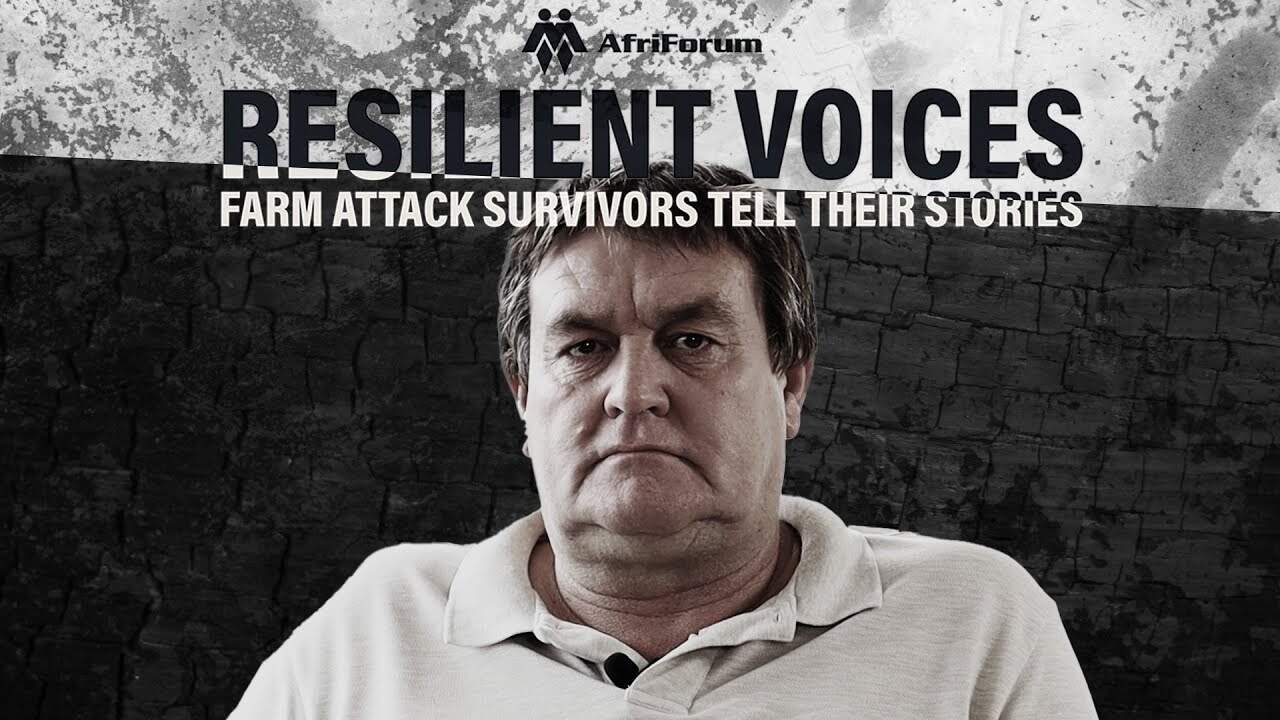
Resilient voices

Reports

Media statements

27/11/2025
Diplomatic crisis with the US is in no one’s interest – AfriForum

The civil rights organisation AfriForum says the current diplomatic crisis with the US is not in anyone’s interest in South…

13/08/2025
AfriForum welcomes US State Department report confirming persecution of minority groups, threats to property rights

According to the civil rights organisation AfriForum, the detailed report published by the US State Department’s Bureau of Democracy, Human…

29/07/2025
US investigation confirms farm murders are not “ordinary crimes” – AfriForum

AfriForum this morning again called for the prioritisation of farm attacks after an investigation into farm attacks by the US…

17/07/2025
Leandra farm attack: AfriForum welcomes heavy sentences for three attackers

AfriForum welcomes the heavy sentences imposed today by the Evander Magistrate’s Court on three men who attacked and robbed a…

04/06/2025
NPA’s inaction in 81-year-old farmer’s murder case a disgraceful failure of justice

Soundbite: Jacques Broodryk (English) Soundbite: Jacques Broodryk (Afrikaans) AfriForum maintains that the National Prosecuting Authority (NPA) is guilty of a…

28/05/2025
Ramaphosa violates UN Genocide Convention by failing to condemn “Kill the Boer”

AfriForum says that the fact that President Cyril Ramaphosa once again refused yesterday to condemn the “Kill the Boer, kill…